


What is Diamond Melee?
The essential guide for jewellers — from sizing and grading to sourcing and setting
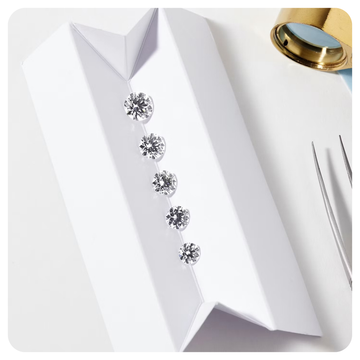
Melee Definition
Diamond melee refers to small diamonds, typically under 0.20ct, used to accent or pavé-set fine jewellery pieces. They are graded by colour, clarity, and cut just like larger stones, and are available in both natural and lab grown varieties.
Melee is sold individually or in matched parcels — but not as individually certified stones — making it the go-to choice for jewellers setting halos, pavé bands, channel settings, and side stones.
How Big Are Melee Diamonds?
Melee diamonds are defined by their small size — typically ranging from 0.8mm to 6mm in diameter, with carat weights usually below 0.25ct per stone. The term covers a wide range of sizes used across different setting styles.
Because melee is set in multiples — sometimes dozens of stones in a single piece — consistency across a parcel is critical. Stones must match in colour, clarity, and cut so the finished piece looks uniform under light.


Lab Grown vs Natural Diamond Melee — What's the Difference?
Lab grown and natural melee diamonds are chemically, physically, and optically identical. The difference lies in origin: natural melee is mined, while lab grown melee is created in a controlled environment using either HPHT or CVD processes.
For jewellers, the practical differences come down to three things:
- Price: Lab grown melee is significantly more affordable, allowing better margins or more competitive pricing for clients.
- Ethics: Lab grown carries a clear ethical and sustainability story — increasingly important to end consumers.
- Availability: Lab grown melee is available in a wider range of fancy colours (pink, blue, yellow, green) that would be extremely rare and expensive in natural form.
Both types are graded to the same standards and, when set, are visually indistinguishable to the naked eye.
How Are Melee Diamonds Graded?
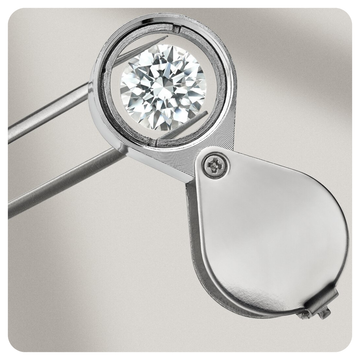
Melee is graded across the same four Cs as larger diamonds, but assessed as a parcel rather than stone by stone:
- Colour: Colourless melee is graded D–F. At The Carat Club, we supply D–F colour only — truly colourless stones that won't introduce warmth into a white gold or platinum setting.
- Clarity: Melee is graded as VVS, VS or SI. Individual inclusions are not mapped as they would be on a larger certified stone, but the parcel standard ensures all stones meet the quality assigned.
- Cut: Round brilliant is the most common cut for melee, optimised for maximum light return even at small sizes. Cut consistency across a parcel ensures uniform brilliance in the finished piece.
- Consistency: Beyond the four Cs, parcel consistency — matching diameter tolerances, girdle thickness, and culet — is what separates quality melee from commodity stock.
Do Melee Diamonds Come With a Certificate?
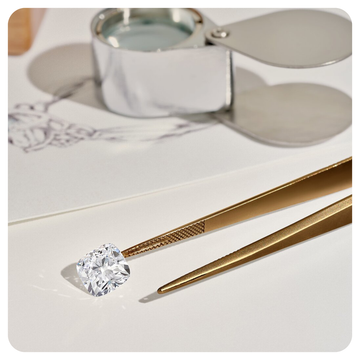
This is one of the most common questions we receive from jewellers — and the short answer is no.
Melee diamonds do not come with individual grading certificates. Certifying each stone individually (through laboratories such as GIA, IGI, or HRD) is not commercially viable at melee sizes — the cost of certification would far exceed the value of the stone itself.
Instead, melee is sold with a defined set of quality parameters (colour range, clarity grade, cut grade, size tolerance) that the entire parcel is graded to meet.
What this means in practice:
-You will not receive a GIA or IGI certificate with your melee order
-The quality assurance comes from the supplier's grading standard and reputation
- At The Carat Club, every parcel is graded to our strict internal standards — D–F colour, VVS-SI, excellent cut — so you can reorder with confidence
- If a client asks whether their pavé diamonds are certified, the honest answer is that melee is graded to a parcel standard, not individually certified — this is industry-standard practice across all melee suppliers worldwide
What Is Fancy Colour Melee?
Fancy colour melee refers to small diamonds in non-white hues — most commonly pink, blue, yellow, and green. In natural form, fancy colour diamonds of any size are exceptionally rare and expensive. Lab grown technology has made fancy colour melee accessible and consistent for the first time.
Fancy colour melee is graded differently to colourless stones — colour intensity (Faint, Very Light, Light, Fancy, Fancy Intense, Fancy Vivid) matters more than the D–Z scale. For setting purposes, parcel consistency in hue and saturation is the priority.
At The Carat Club we stock round brilliant fancy colour lab grown melee in:


How to Buy Diamond Melee — What Jewellers Should Know
Buying melee is different from buying a centre stone. Here's what to look for:
1. Parcel consistency: The most important factor. Inconsistent melee — mismatched sizes, colour variation, uneven cut — will show in the finished piece. Always buy from a supplier with defined grading standards.
2. Size tolerances: Melee is sold by diameter (e.g. 1.5mm), but tolerances vary. Tight tolerances (±0.05mm) are essential for channel and pavé settings where stones must sit flush.
3. Lab grown or natural: The choice between lab grown and natural melee comes down to your client's priorities. Lab grown offers better margins and a clear ethical story; natural carries provenance and tradition.
4. Direct sourcing: Buying direct from a specialist supplier like The Carat Club, rather than through a middleman, keeps your costs down and gives you direct access to stock information and reorder consistency.
5. Ongoing supply: At The Carat Club, we hold deep stock across all sizes and grades — so when you reorder, you get the same stone, same parcel standard, every time. Design with confidence knowing your melee will always be available to match.
Frequently Asked Questions
What size is melee diamond?
Melee diamonds typically range from 0.8mm to 6mm in diameter, with carat weights under 0.25ct per stone. The most common sizes for pavé and halo settings are 1.0mm to 2.0mm.
What is the difference between melee and accent diamonds?
The terms are often used interchangeably. Accent diamonds refer to any small diamonds used to complement a centre stone, while melee specifically refers to diamonds under 0.25ct sold in matched parcels. All melee can be used as accent stones, but not all accent stones are technically melee.
Does melee diamond come with a certificate?
No. Melee diamonds are not individually certified — the cost of certification would exceed the value of each stone. They are sold to a parcel grading standard (colour, clarity, cut, size) set by the supplier. This is standard practice across the industry.
Is lab grown melee the same quality as natural?
Yes. Lab grown and natural melee are chemically and optically identical. Lab grown melee offers the same brilliance and grading standards at a lower price point, with a clearer ethical provenance story.
How many melee diamonds do I need for a pavé band?
This depends on ring size, stone size, and setting style. As a rough guide, a full pavé eternity band in a UK size L using 1.5mm stones requires approximately 60–80 stones. We recommend calculating by the linear millimetre of your setting and consulting your setter.
How do I store and handle melee diamonds?
Store melee in a sealed, labelled parcel paper or stone holder — never loose in a mixed container. Handle with tweezers rather than fingers to avoid oil transfer. Keep away from ultrasonic cleaners until set, as loose melee can be damaged or lost.
What colour grade is best for melee diamonds?
For white metal settings (platinum, white gold), D–F colourless melee is recommended to avoid any warmth showing through. For yellow or rose gold settings, G–H can work well and offers a cost saving.
Can I buy melee diamonds in matched parcels?
Yes — all melee at The Carat Club is sold in matched parcels, graded for consistency in colour, clarity, cut, and size. This ensures uniformity across your finished piece.


